




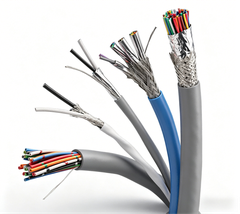

Instrumentation Cable
Your Professional Instrumentation Cable Supplier
Chat Now is a manufacturing company focused on customized low-voltage communication cables and cable solution services. Our main products include SWA/SWB armored cables, RS485 cables, PROFIBUS cables, and SMPTE hybrid optical-electrical cables. These products are widely used in industrial automation, broadcasting, communication systems, and engineering projects.
Custom OEM Support
We provide OEM services for cable structure, materials, packaging, and small design adjustments based on customer requirements and project needs.
Professional Engineering Team
Our engineers offer practical support for cable selection, specifications, and application solutions to help customers improve project efficiency.
Stable Quality Control
With advanced production equipment and strict inspection processes, we ensure consistent cable quality, reliable performance, and stable delivery times.
Responsive Service
We provide fast communication, technical assistance, and long-term support to build smooth and reliable cooperation with global partners.


Parameter
|
Cable performance(at 20℃) |
Data of product |
|
Inner Conductor DC Resistance |
≤12.10/km |
|
Test Voltage |
2000V/5min,no break down |
|
Capacitance |
≤250nF/km |
|
Insulation Resistance |
≥1000MQ ·km |
|
Operating Temperature |
-20℃~+90℃ |
|
Operating Voltage |
500V |
|
Flame Retardant Requirements |
IEC 60332-1-2 |
|
General requirements |
RoHS Compliant |
Advantages of Instrumentation Cable
Superior Signal Integrity
The shielded construction and twisted pair design effectively reject electromagnetic interference, ensuring accurate data transmission even in electrically noisy industrial environments.
Reliability and Longevity
High-quality materials and robust construction result in extended service life, reducing replacement frequency and maintenance costs.
Safety Compliance
Instrumentation cable manufacturers design and produce cables in compliance with international standards such as IEC, BS, and NEC, ensuring safe and reliable operation in hazardous environments when properly selected.
Versatility
With various configurations available, these cables can accommodate different signal types, voltage levels, and environmental conditions within a single product family.
Cost Efficiency
Despite higher initial costs compared to standard cables, the reduction in signal errors, downtime, and troubleshooting expenses provides excellent long-term value.
Enhanced Process Control
Accurate signal transmission leads to better process optimization, quality control, and energy efficiency, directly impacting profitability.
Power Plants
Transmit signals for monitoring and controlling turbines, generators, and other equipment.
Petrochemical Industries
Ensure accurate signal transmission for process control and safety monitoring systems.
Manufacturing Facilities
Facilitate communication between automated machinery and control systems for precise operations.
Healthcare
Support signal transfer for medical equipment and monitoring systems in hospitals and laboratories.
Renewable Energy
Used in solar and wind energy systems for monitoring power generation and control processes.

Step-by-Step Procedure for Instrumentation Cables
Signal Generation
A sensor or instrument generates a low-level electrical signal.
Signal Transmission
The signal travels through the cable conductors.
Insulation Protection
Each conductor is insulated to prevent electrical leakage.
Shielding Protection
Metallic shielding blocks electromagnetic interference from nearby equipment.
Signal Reception
The signal reaches the control system, such as a PLC or monitoring device.
Data Processing
The control system interprets the signal and performs necessary actions.
Difference Between Instrumentation Cable and Power Cable
|
Feature |
Instrumentation Cable |
Power Cable |
|
Purpose |
Signal transmission |
Power transmission |
|
Voltage Level |
Low voltage signals |
High voltage power |
|
Shielding |
Usually shielded |
Often unshielded |
|
Conductor Size |
Small conductors |
Large conductors |
|
Applications |
Sensors and control systems |
Electrical power distribution |
Precautions for the Installation of Instrumentation Cables
Select the Right Cable
Choose based on system requirements, environmental conditions, and signal type.
Ensure Proper Routing
Avoid running cables near high-power lines to reduce interference.
Use Appropriate Connectors
Ensure compatibility with devices and systems for seamless operation.
Follow Safety Standards
Adhere to local and industry regulations for secure installation.
Ordering Process
Inquiry - Quotation - Communication - Order Confirming - Deposit Payment - Production - Testing And Debugging - Balance Payment - Packing - Delivery - Customer Receiving - After Service.
Packaging and Shipping
|
Packaging |
Coil or Drum packaging Packing length can be adjusted based on installation needs. |
|
Shipping |
Shipping by sea, by air, by express are acceptable. According to your requirements. |
Our Certificates


FAQ
Zhejiang Chatnow New Material Technology Co., Ltd. is well-known as one of the leading instrumentation cable manufacturers and suppliers in China, specialized in providing high quality customized service. Please feel free to wholesale high-grade instrumentation cable at competitive price from our factory.
Instrumentation Cable 19PRx1 0mm2, flexible flat power cable, EV Cable 50mm2