




 What Is a Security Cable?
A security cable is used to carry low-voltage signals between different security devices. It connects components such as cameras, alarm panels, sensors, and access control units.
Its main job is simple: make sure signals are transmitted clearly and consistently, without interference or interruption.
What Is a Security Cable Used For?
You'll find security cables in almost every type of security setup:
CCTV Systems
Connecting cameras to monitors or recorders, ensuring stable video transmission.
Alarm Systems
Linking motion sensors, door contacts, and alarm panels so signals can be triggered instantly.
Access Control
Used between card readers, keypads, and control units in offices or restricted areas.
Fire Alarm Systems
Transmitting signals between detectors and control panels, where reliability is critical.
Building Security Networks
Supporting integrated systems that combine surveillance, alarms, and access control.
Key Features of Security Cables
Security cables are built for signal stability and long-term use:
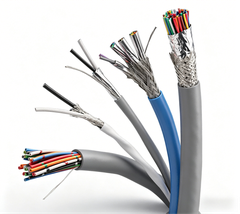
Multi-core or twisted pair design for consistent signal transmission
Shielding to reduce interference from nearby electrical equipment
Low-voltage design for safe operation
Flame-retardant or LSZH jacket for indoor installations
Durable outer sheath to handle long-term use in walls or ceilings
Why It Matters
If the cable isn't stable, the system won't be either. Common issues caused by poor-quality cables include:
Unclear or lost video signals
False alarms or delayed responses
Frequent maintenance or system downtime
In real projects, these problems cost time and money - and in some cases, compromise safety.
Industry Perspective
As security systems become more connected and integrated, signal reliability is becoming just as important as the devices themselves.
At Chatnow Technology, we focus on practical performance - stable transmission, compliant materials, and cables that hold up over time in real installations.