



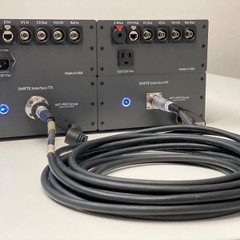

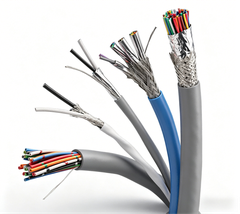
Composite cables are integrated cables that combine multiple functional cores. Their key features are simplified wiring and improved efficiency, making them widely used in industrial automation, monitoring, and communication applications. Composite cables achieve "one cable, multiple uses" by integrating different types of cores. Multiple signal lines, power lines, shielded cables, coaxial cables, etc., can be combined as needed, some including overall shielding or tensile strength steel wire. They are highly adaptable to various environments, possessing bending resistance, high and low temperature resistance, and interference resistance (double shielding).
Common composite cable types include:
Power + Control Combination: 3×35mm² power line + 3×4mm² control line. Suitable for power supply and control of mobile equipment such as cranes and ladle cars.
Optical Cable + Electrical Cable: Integrated remote optical network unit, for building-to-building power and network connectivity.
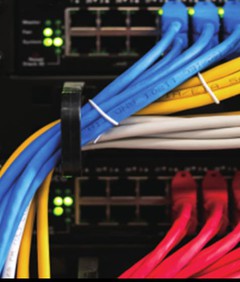
Network Cable + Power Cable Combination: Used for monitoring systems and industrial automation cabling.
Reducing the number of cables and lowering construction costs. Widely used in industrial automation, robotics, and other applications. Composite cables typically integrate communication and power lines. Communication cables are mostly twisted-pair shielded cables, employing double shielding of aluminum foil and tinned copper mesh for enhanced electromagnetic interference resistance. The power supply section uses single-core or multi-core power wires with multi-strand twisted tinned copper conductors to meet varying power requirements.
This design reduces the number of cables and simplifies installation. The anti-interference design, with twisted-pair and double-shielded communication cables, prevents power supply interference with the signal. Special manufacturing processes allow for frequent bending, extending cable lifespan.